

CASCINA LIETO
Castiglione Tinella
Piedmont
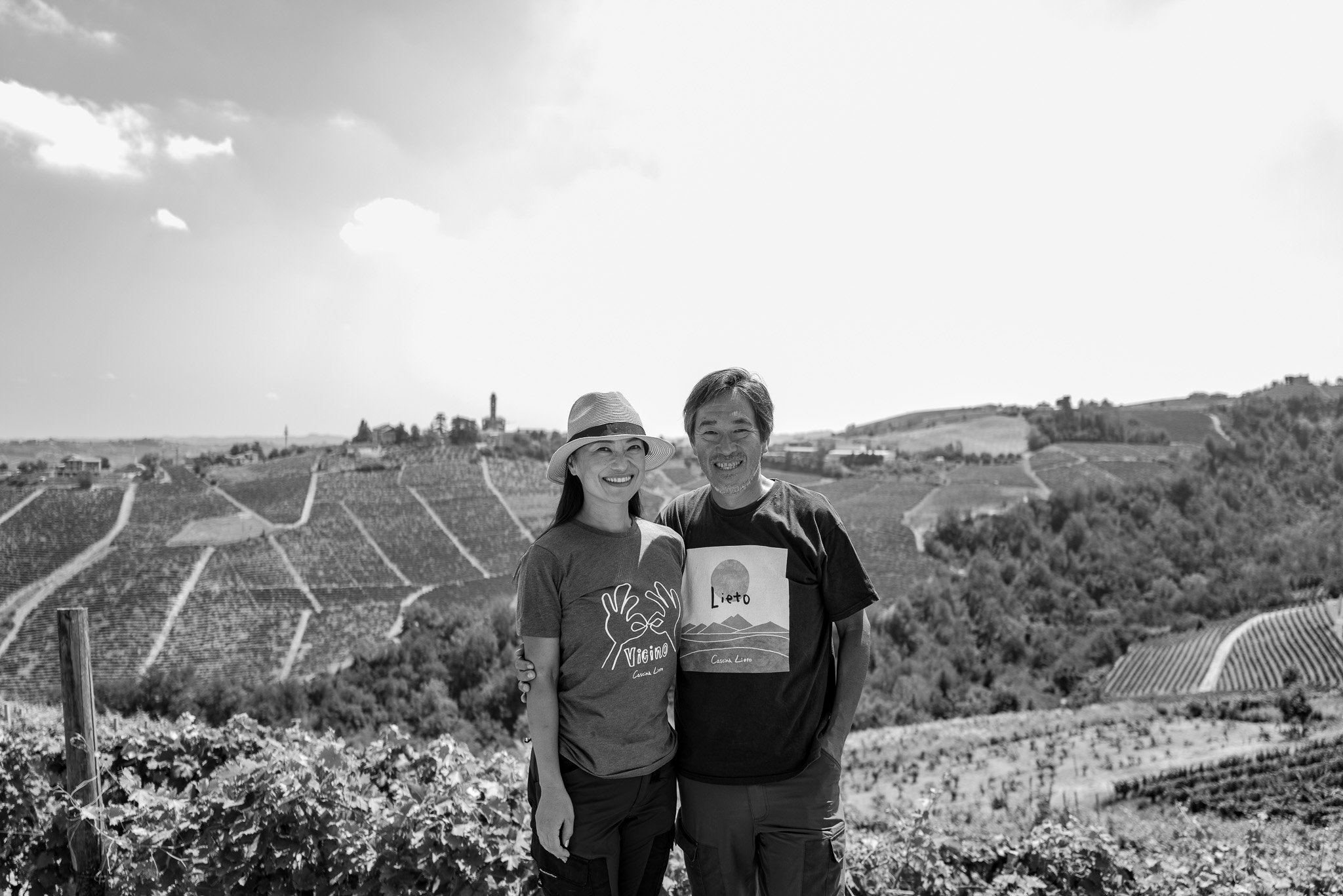
Founded in 2018 by Rie and Hiroto Sasaki, Cascina Lieto is nestled in Castiglione Tinella, on the border between Langhe and the Asti region. With a rich history in the wine industry and residency in Italy since 1997, Hiroto envisions crafting unique wines from the hills encompassing the old estate he acquired upon their move to Piedmont in 2017.
Despite the minuscule production, the couple's expertise shines through meticulous craftsmanship, evident since their inaugural 2018 vintage which showcased captivating expressions of Moscato and Cortese from the 50-year-old vineyard that came with the purchase of the winery. Their range has since expanded, embracing Freisa and Barbera, and culminating with the introduction of Nebbiolo for the 2020 vintage.
Since our first visit we were taken by the winery's next level dedication to quality, driven by an intuitive and nature-centric approach. Hiroto explained how he patiently waits for the seeds to mature and taste ‘crunchy’ before harvesting grapes with optimal ripeness yet maintaining impeccable acidity. In the cellar, fermentations also take their time; macerations unfold gently, nothing is rushed and there are no set dates for pressing. Only when the alcoholic fermentation is over and the skins and seeds stop rising to the top, pressing takes place. No analyses are performed, nor are Brix levels checked. It's all about tasting. All wines mature a minimum of two years in bottle before release. Currently producing a modest 4,000 bottles per vintage, the Sasakis aspire to eventually achieve an output of up to 10,000 bottles as they continue to evolve their winemaking journey.
In 2020, favourable weather conditions through winter and spring, fostering mild temperatures and minimal rainfall, set the stage for an early ripening season. However, from May onwards, erratic and rainy days prevailed. Late August saw a temperature drop, briefly delaying maturation, though a quick recovery followed rain and sun.
Despite encountering acetic acid grapes due to persistent rain, vigilant daily vine inspection and selective pruning took place until harvest, which commenced on September 19th. The harvest, challenging to say the least, yielded less than half the average but garnered around 30% noble rot bounty.
The red grapes on the other hand matured smoothly, particularly the Barbera which benefited from early summer water supply and is displaying excellent acidity and aromatic elegance thanks to significant day-night temperature shifts.

Crochè
Vintage 2021
Style Sparkling
Region Castiglione Tinella, Piedmont
Varieties Moscato, Cortese
ABV 13%
Soils Clay, Marl
Farming Organic, Biodynamic practices
Winemaking Crochè is their take on a frizzante. Moscato and Cortese come from the vineyard on to which the estate’s overlooks. These are harvested separately and undergo a brief maceration on the skins in neutral fibreglass and plastic fermenters. Once dry the two wines are racked and left age separately until summer. In August 2021 a small amount of frozen Moscato must (5%) is then added to the aged (and now blended) wine and bottled without filtration. The wine re-ferments and ages in bottle until the following Spring. No disgorgement.
Tasting Note The name of this wine comes from the Piedmontese dialect, meaning “crunchy” in Italian.
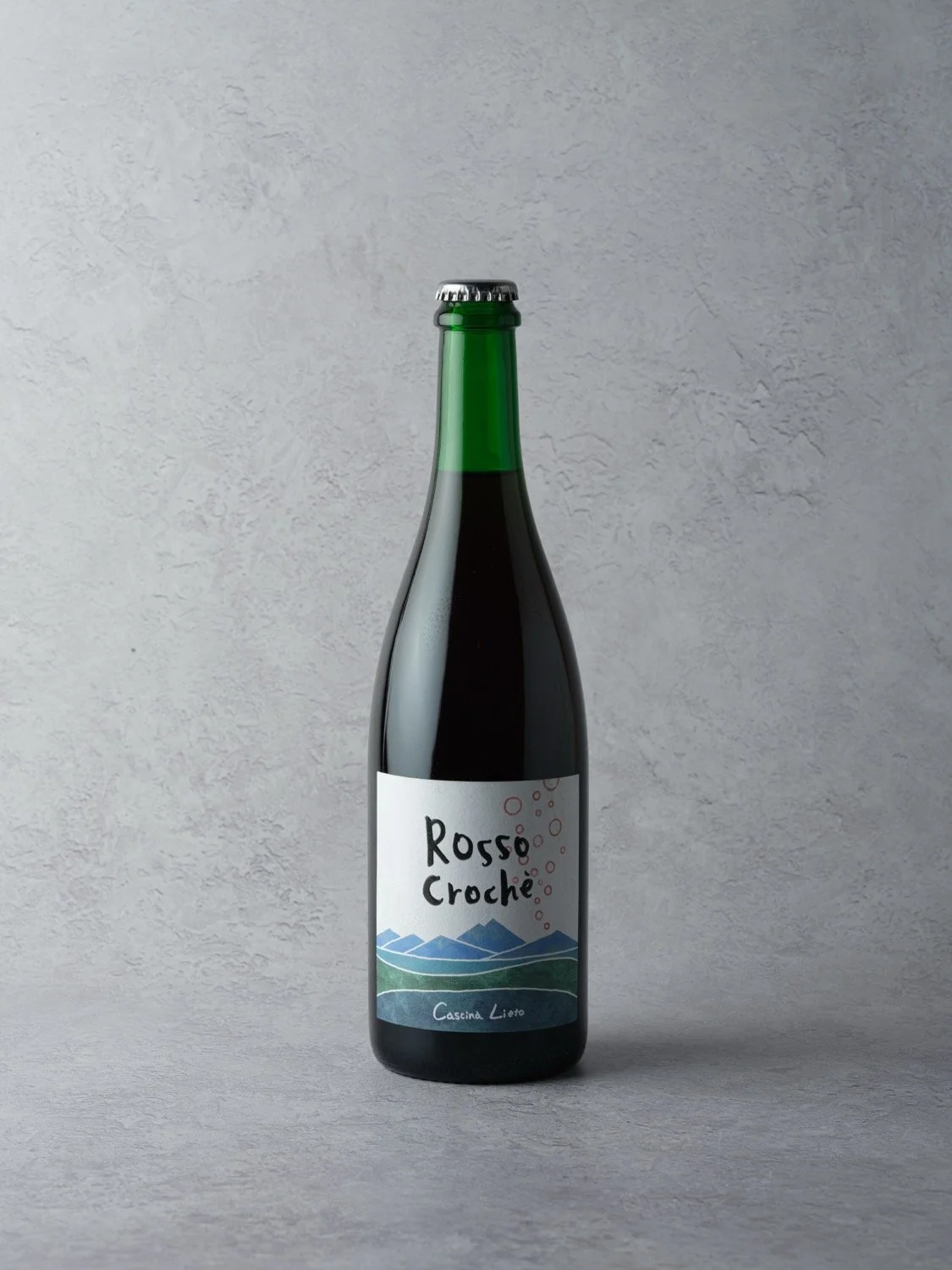
Rosso Crochè
Vintage 2022
Style Sparkling Red
Region Castiglione Tinella, Piedmont
Varieties Moscato, Barbera
ABV
Soils Tuff, Limestone
Farming Organic, Biodynamic practices
Winemaking From 31 year old vines of Moscato Bianco (85%) and Barbera (15%) The harvest took place on September 3 for Moscato and September 19 for Barbera. After
destemming and crushing, Moscato and Barbera were fermented separately in 1000 litre
open-top plastic vats using only indigenous yeasts, without temperature control. During
fermentation, punch-downs were performed three to four times daily.
Pressing took place one month after picking for each grape, and was perfomed after alcoholic fermentation completed. After pressing, the first
racking took place on October 8 for Moscato and October 25 for Barbera, followed by aging in 1
000 litre fiberglass vats.
Before bottling, a second racking was performed, and frozen Moscato must was thawed and
blended with the aged wine. In September 2023, fermentation resumed, and the wine was bottled unfined and unfiltered. After undergoing bottle fermentation and aging, it was released without disgorgement.
Tasting Note

Sensazione
Vintage 2021
Style Skin Contact
Region Castiglione Tinella, Piedmont
Varieties Moscato, Cortese
ABV 14%
Soils Clay, Marl
Farming Organic, Biodynamic practices
Winemaking Moscato and Cortese are picked a day apart, 19th and 20th September respectively. Grapes are de-stemmed and crushed, but kept separate. Moscato ferments in fibreglass, whilst Cortese is in 500L open-top plastic tubs. In 2020 the Moscato spent 3 weeks on the skins, Cortese both with regular punch downs during fermentation. After a first racking both varieties feed into fibreglass where they are rested for a whole year before blending and bottling. Once bottled, the wines spends a further 12 months ageing sur latte before being released.
Tasting Note Sensazione is the winery's second white wine and it translates as sensation in Italian. Cortese is
co-planted alongisde 56yo Moscato vines from the vineyard surrounding the estate. This wine is an homage to
Agostino Marmo, the previous owner of their vineyard. The nose veers towards hints of citrus, flowers and herbs. On the palate it is mineral, with good freshness and crunchy bitters.
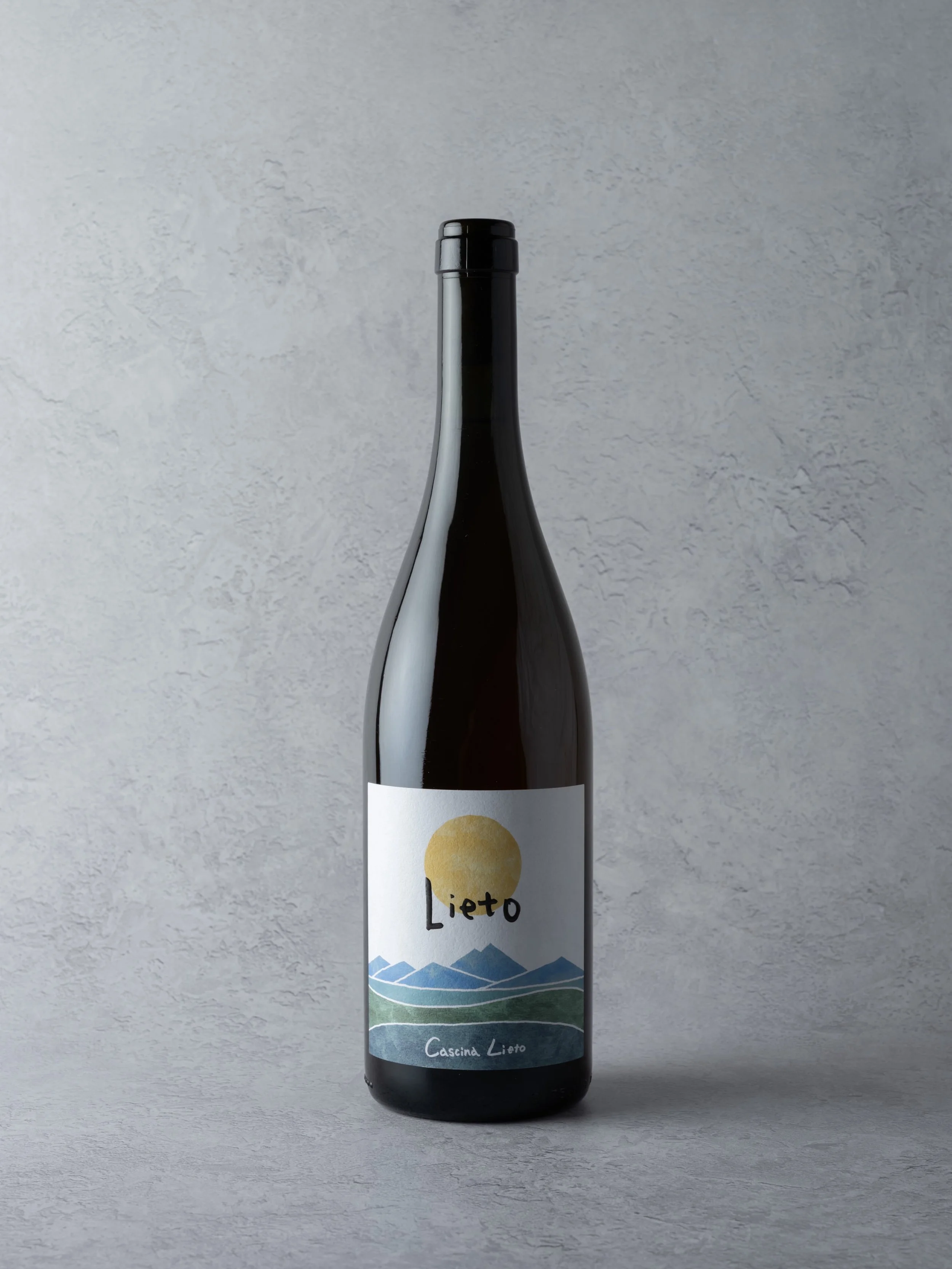
Lieto
Vintage 2021
Style Red
Region Castiglione Tinella, Piedmont
Varieties Moscato
ABV 14%
Soils Clay, Limestone, Sand
Farming Organic, Biodynamic practices
Winemaking The winery’s flagship wine made with 100% Moscato Bianco from 56 year old ‘Brosia’ vineyard. The fruit has been harvested on the 20th of September and spontaneously fermented in 700 and 1000L fibre glass barrels and 500L plastic barrels without temperature control. The must was stirred 3-4 times a day for around 3 weeks, followed by pressing and ageing in 1500L fibre glass barrels until July the following year. The wine was not fined, nor filtered. The wine was aged in bottle until release in March 2024.
Tasting Note

LR
Vintage 2020
Style Skin Contact
Region Castiglione Tinella, Piedmont
Varieties Moscato
ABV 15.5%
Soils Clay, Marl
Farming Organic, Biodynamic practices
Winemaking A new wine, which was initially supposed to become Bianco Lieto. September was particularly rainy and the levels of acetic
acid in the grapes started rising incredibly fast. The couple had to pick berries one by one and as a result of the
daunting work, the overall harvest was less than half of the average year. Luckily, about 30% of the crop
was graced by the noble rot. After de-stemming and
crushing, the wine moves to fibreglass where it ferments on the skins for nearly 4 weeks. Racking and ageing follows the same procedure as Sensazione, including a full year of ageing in bottle before release.
Tasting Note The abbreviation LR on the label stands for Lieto Riserva. A powerful cuvée showcasing notes apricot pie, geranium, dried orange lending on to some medicinal herbal tones, marsipan and rose. A wine to awake your senses!

Litmo
Vintage 2021
Style Red
Region Castiglione Tinella, Piedmont
Varieties Barbera
ABV 13.5%
Soils Clay, Limestone, Sand
Farming Organic, Biodynamic practices
Winemaking Barbera harvested on 29th September is de-stemmed, then crushed and begins fermenting in fibreglass where it remains on the skins until October 24th. Grapes are then pressed and the wine is left to settle before racking about a week later. Once racked the wines moved to old barrels to age for 12 months. Bottled without filtration and aged for another whole year before release.
Tasting Note

Sage
Vintage 2021
Style Red
Region Castiglione Tinella, Piedmont
Varieties Freisa
ABV 13%
Soils Clay, Limestone, Sand
Farming Organic, Biodynamic practices
Winemaking Freisa is the first of the red varieties to be picked, generally harvests coincides with the harvest of the whites, which was exactly the case for 2020. Grapes are de-stemmed and crushed and undergo a slightly shorter maceration of just over two weeks. After pressing and a first racking, the wine moves to age in demijohns for a year. After a couple more racking it is bottles unfiltered and aged sur latte for a further 12 months.
Tasting Note The name Sage comes from the Piedmontese dialect assaggiare, meaning “to taste”.

Bisò
Vintage 2020
Style Red
Region Castiglione Tinella, Piedmont
Varieties Nebbiolo
ABV 14.5%
Soils Clay, Limestone, Sand
Farming Organic, Biodynamic practices
Winemaking 2020 was the estate’s inaugural vintage of Nebbiolo, something that had been on Rie and Hiroto’s mind since moving to the region. Harvest took place on October 8th. After de-stemming and crushing, the wine was fermented in 500L open-top plastic tini without temperature control. During fermentation, Hiroto was performing about four punch downs per day. Pressing then took place on November 4th followed by a first racking before transferring to old barrels for ageing. After two winters resting in barrel, it was finally ready to be bottled (without any fining nor filtration) in February 2022. And only after an additional year in bottle ageing sur latte it was labelled and released
in March 2023.
Tasting Note Similarly to the other cuvées, Bisò also comes from the Piedmontese dialect and translates as gioiello, meaning “jewel”, in reference to its elegance.
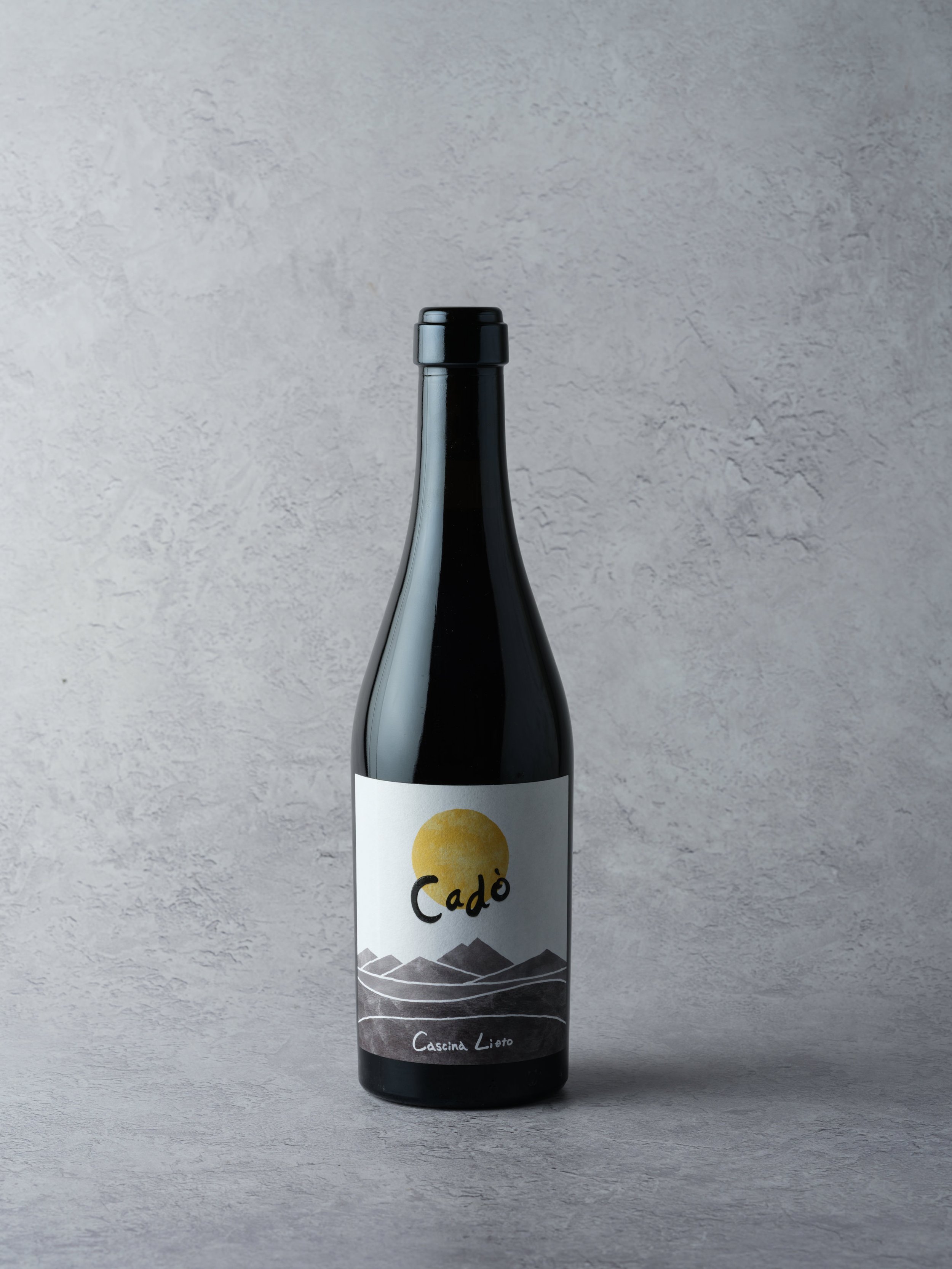
Cadò
Vintage NV
Style Sweet
Region Castiglione Tinella, Piedmont
Varieties Moscato Bianco
ABV
Soils Marl, Limestone, Sand
Farming Organic, Biodynamic practices
Winemaking Rather
than making a conventional passito, they decided that the solera
method would best express their identity.
This first release blends five vintages from 2019 to 2023. Moscato Bianco from vines aged between 53 and 57 years, from a vineyard, located in front of the
winery in Castiglione Tinella. The grapes were harvested around a month later than usual,
allowing them to overripen in an air-dried state before picking. Harvested
in mid-October. The grapes were pressed whole-cluster and
fermented naturally in 54 litre demijohns, without
temperature control.
After fermentation, the wine was racked, then continued aging in demijohns. This
process is then repeated every year. with the blending of new wines.
The wine was bottled unfined and unfiltered in November 2024 before a period of bottle aging.
The name Cadò comes from the Piedmontese dialect, meaning "gift".
Tasting Note