
DOMAINE DE BICHERY
Neuville-sur-Seine
Champagne
The story of Domaine de Bichery intertwines family legacy, personal journeys, and a deep-rooted commitment to mindful winemaking. It all began with Raphaël's return to his family's estate in 2013, armed with experiences gathered from various wine regions in France via Switzerland. Growing up in the vineyards of Neuville-sur-Seine, influenced by his grandfather's dedication to the land, Raphaël inherited his passion for viticulture and winemaking. The encounter with Hannah during the 2012 harvest eventually led them to reunite at Bichery, where they decided to jointly take over the family vineyards, converting them to organic practices.
In 2015, they vinified their first Champagne, marking a significant milestone for the Domaine. From the start, the duo consistently relied on instinct. They embraced unconventional (at the time) methods, choosing the uncertain yet delicate approach of plant preparations over the convenience of chemistry, refining these techniques over the years. With Raphaël's oenology education and Hannah's diverse background, they poured their dedication into the estate’s growth, meticulously crafting every aspect of their produce and projects.

In Febuary 2019, after three years of mandatory conversion time, the Domaine obtained the official Ecocert certification. Bichery today farms ten parcels in those same sloping hills above the town where Raphaël grew up, Neuville. Additionally, after several years spent making wine outside the walls of the tiny cuverie inherited from grandfather Charles, they have just inaugurated a brand new cellar in an old, fully refurbished building adjoining their house. In this vaulted cellar lie rows of barrels filled just a few days before our visit. Despite the expansion, production is still very small, capping at 12,500 bottles with the 2020 releases.
Along with offshore’s Charles Dufour, Bichery are also part of the "Association des Champagnes Biologique", a community of certified organic grower Champagne producers pushing for a new level of terroir-driven quality.
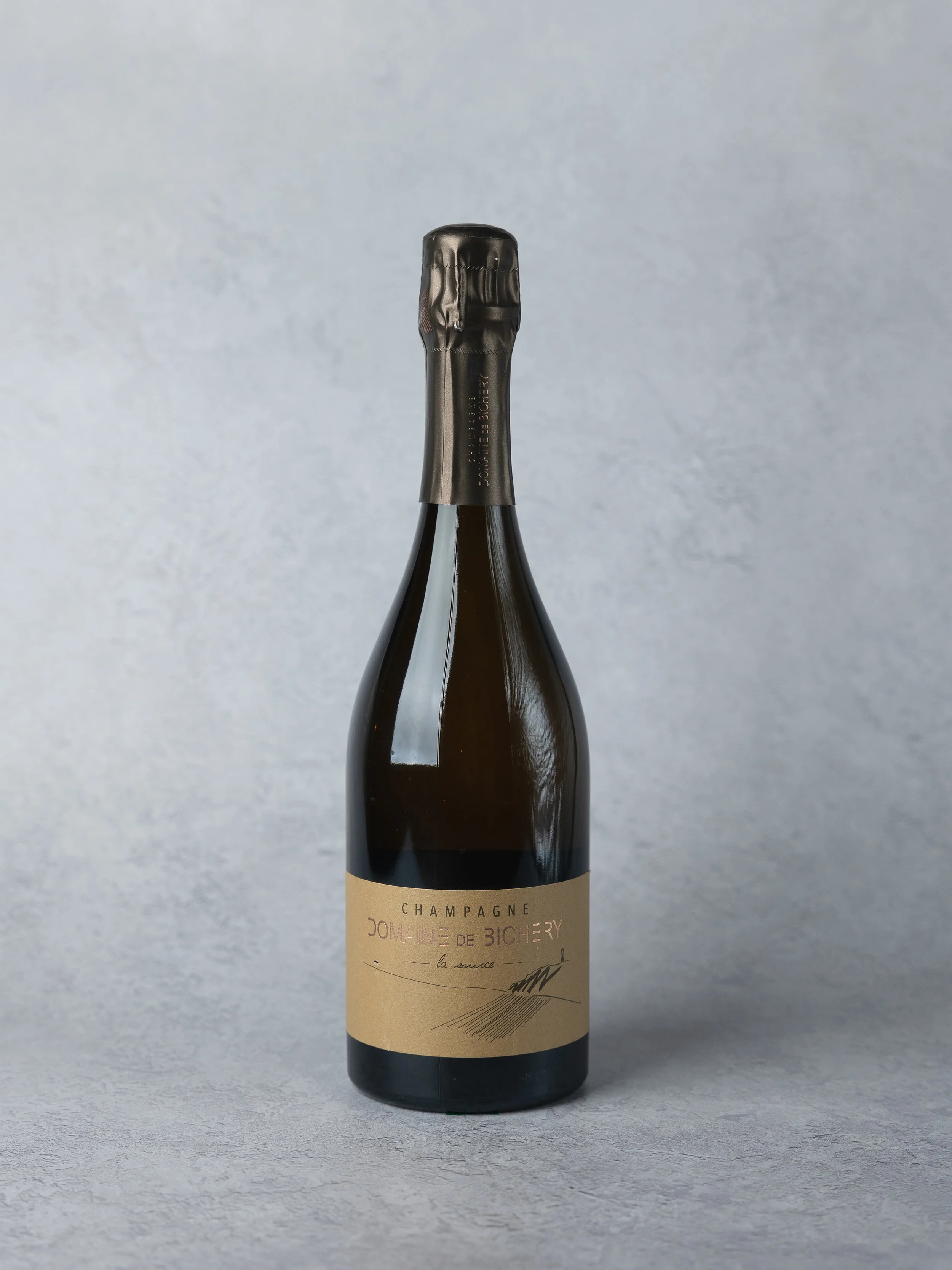
La Source
Vintage 2022
Style Sparkling
Region Côte des Bar, Champagne
Varieties Pinot Noir, Chardonnay
ABV 12.5%
Soils Portlandian limestone, Clay
Farming Organic
Winemaking 50% Pinot Noir and 40% Chardonnay and 10% of Pinot Meunier, source from the domaine’s all ten plots. 40% of the wine is vinified in Burgundy barrels (used, of at least 2nd to 3rd passage,
from a very good friend in Pommard), and 60% in stainless steel tanks. Malolactic occurs naturally and the wine is allowed to go through a natural chilling during the winter. After fermentation
the wine rests on its lees until bottling on the until tre 28th of April 2023. The wine is disgorged in March 2025.
No filtration, no fining, no dosage. No added SO2.
Tasting Note La Source aka ‘where it all begins’. This cuvée symbolises the launch of the estate and its flagship wine. Direct and precise, it display pure citrus fruit with a hint of brioche. Long and mineral on the finish.

Les Terres Mêlées
Vintage 2022
Style Sparkling
Region Côte des Bar, Champagne
Varieties Pinot Noir
ABV 12.5%
Soils Portlandian limestone, Clay
Farming Organic
Winemaking 100% Pinot Noir from three different parcels: Les Mees, Val Ligé and La Fontaine du Noyer and Val Cureaux. The wine is spontaneously fermented in a mixture of oak barrels (40%) and stainless steel (60%). Malolactic conversion happens naturally. Once these are completed the wine is kept to age on the lees until bottling on the19th of May. No filtration, fining nor dosage. The wine is allowed to go through a natural chilling during the winter. No added SO2.
Tasting Note Soft apricot notes, biscuity spice, dried herbs come to mind. Mineral driven yet backed with deeper intense tone.
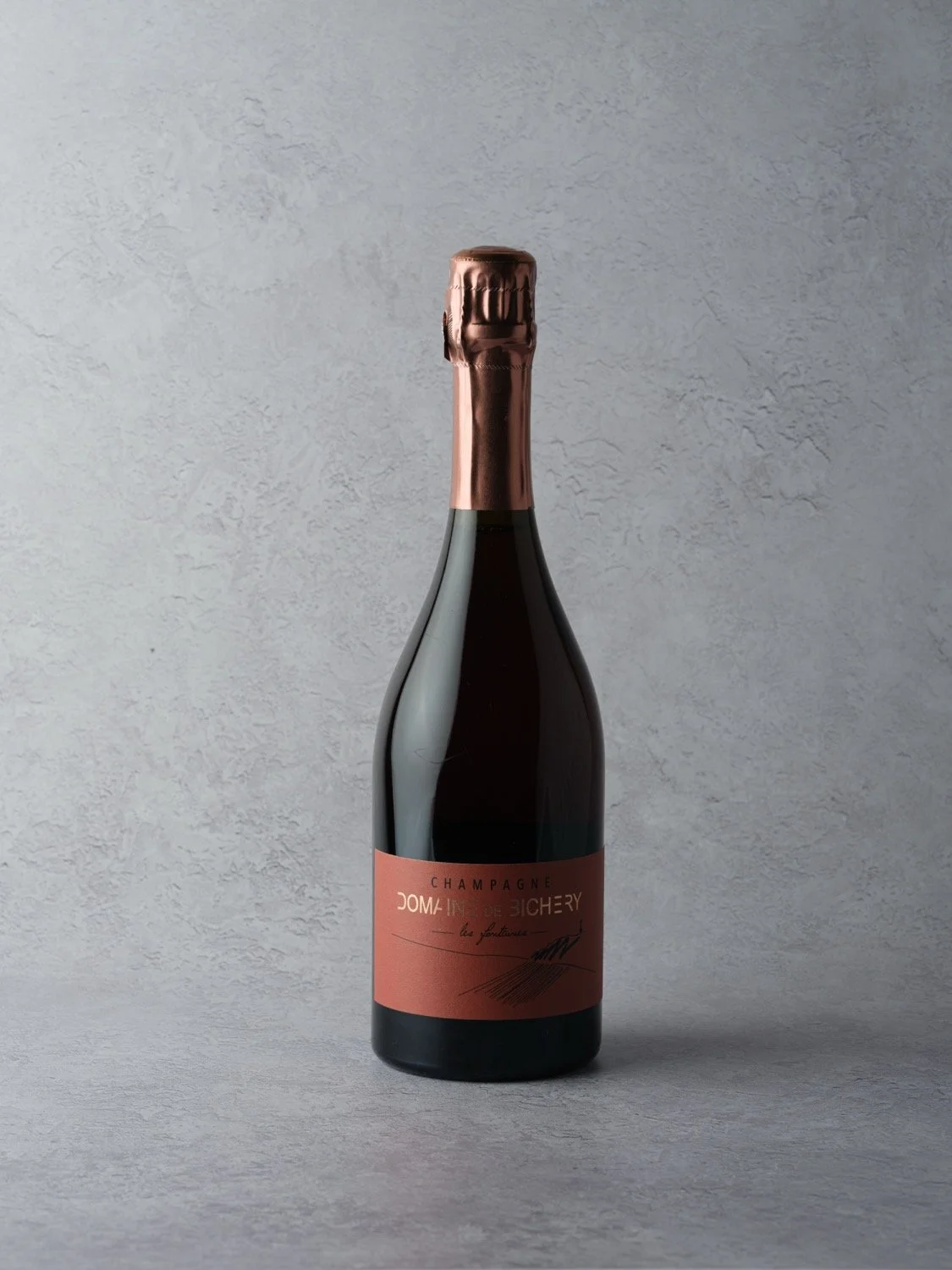
Les Fontaines
Vintage 2022
Style Sparkling Rosé
Region Côte des Bar, Champagne
Varieties Pinot Noir
ABV 12.5%
Soils Portlandian limestone, Clay
Farming Organic
Winemaking A beautiful Rosé Champagne made with 100% Pinot Noir. 10% of the grapes are vinified as a red wine and the remaining as a Blanc de Noir. The grapes used to produce the red wine are harvested around 2 weeks later providing a higher level of maturity and richness to the blend. The wine is spontaneously fermented in a mixture of oak barrels (30%) and stainless steel (70%). Malolactic fermentation is realised naturally. Once both fermentations are finished the wine is kept on the lees until the 27th of April 2023. The wine is unfined and unfiltered and goes through a natural chilling during the winter. Disgorgement took place in March 2025. Brut nature. Similarly to La Source and Terres Mêlées, this is a fully sans-souffre wine.
Tasting Note A beautiful intense rosé Champagne with expressive ripe red cherry, goji berries, liquorice and blossom notes. The fruit is bright and precise, with layered complexity and textural bite.

Le Saignée de Meunier
Vintage 2022
Style Sparkling Rosé
Region Côte des Bar, Champagne
Varieties Pinot Meunier
ABV 12.5%
Soils Portlandian limestone, Clay
Farming Organic
Winemaking A singular Rosé Champagne made from 100% Pinot Meunier from a single plot. 50% of the grapes are hand destemmed, 50% are whole bunches, and the grapes are macerated for 48 hours. The wine is spontaneously fermented in stainless steel. Malolactic fermentation occurs naturally. The wines are aged on their lees until bottling, on March 27th 2023. The wine is unfined and unfiltered and goes through a natural chilling during the winter. Disgorgement took place in March 2025. Brut nature. Fully sans-souffre wine.
Only 680 bottles produced
Tasting Note

En Val du Clos
Vintage 2019
Style Sparkling
Region Côte des Bar, Champagne
Varieties Pinot Noir, Chardonnay
ABV 12.5%
Soils Portlandian limestone, Chalk, Clay
Farming Organic
Winemaking The grapes come from the vineyard symbol of the domaine: En Val du Clos.
This is their oldest and steepest vineyard, planted in the late 70s by Raphaël’s grandfather, Charles. At the time, springtime frosts were a recurring threat, therefore he decided to plant the upper third of the plot at Chardonnay and the more resistant Pinot Noir vines in the lower two thirds. 2018 is the first vintage since starting the domaine where they were able to realise this long wished for cuvée, where Chardonnay and Pinot grapes (20% / 80%) are harvested and kept together from the very moment they are pressed. The wine stays on its lees until end of April 2020. This is finally disgorged in February 2024. Only 400 bottles produced.
Tasting Note The 2019 En Val de Clos marks a collaboration with artist Amedeo Macaluso who has created 400 unique hand drawn labels inspired on a harvest day. A beautiful way to celebrate this small production mature style from fruit of some of their older vines.